Each year the meeting brings together researchers, industry leaders, and students for a day of talks, panels, and posters on the frontier of safe and trustworthy AI. This year's program centers on the theme Trust, Verified — or what it takes to build AI we can rely on in high-stakes settings. The lineup brings together leading voices from frontier AI labs, top academic institutions, and the AI research and funding community.

Co-Director, Stanford Center for AI Safety
Associate Professor of Aeronautics & Astronautics, Stanford University
Mykel is an Associate Professor of Aeronautics and Astronautics at Stanford University. He is the director of the Stanford Intelligent Systems Laboratory (SISL), conducting research on advanced algorithms and analytical methods for the design of robust decision making systems. His research contributed to what became the international standard for aircraft collision avoidance. Prof. Kochenderfer is a co-director of the Stanford Center for AI Safety and senior fellow of the Stanford Institute for Human-Centered Artificial Intelligence (HAI). He is editor-in-chief of the Journal of Artificial Intelligence Research. He is an author of the textbooks Decision Making under Uncertainty: Theory and Application (MIT Press, 2015), Algorithms for Optimization (MIT Press, 2019), Algorithms for Decision Making (MIT Press, 2022), and Algorithms for Validation (MIT Press, 2026).
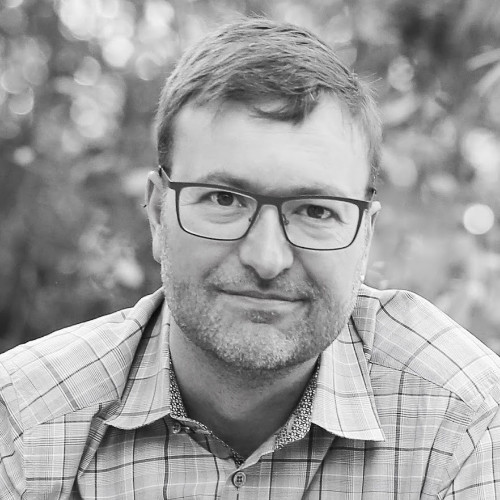
Head of Safeguards
Anthropic
Dave is Head of Safeguards at Anthropic, where he leads the work to prevent misuse of Claude and to keep Anthropic's users safe. Before Anthropic, he was Director of Engineering for AI Safety and Alignment at Google DeepMind, where he worked on Gemini safety and alignment. Earlier, he spent many years at Google working on the Assistant and in Research as a machine learning and language-understanding product manager. He is on the board of the David and Lucile Packard Foundation and the Effective Institutions Project. He studied Symbolic Systems at Stanford with a concentration in Artificial Intelligence.
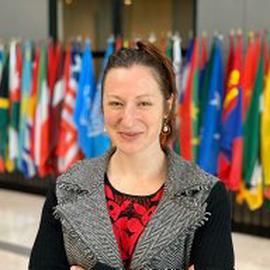
Head of Safety
Cohere
Seraphina is the Head of Safety at Cohere, where she works on both the practice and the theory of evaluating and mitigating harms from LLMs. She has a PhD in NLP from the University of Edinburgh, with a focus on Fairness, and an MSc from UW, with a focus on generation. Her research interests include the changing landscape of agentic security, agentic simulated worlds, and the intersection of safety with robustness and generalisation. Before her PhD, she worked as a Research Engineer at the Information Sciences Institute, and for many years at Google in Tokyo, NYC, and Shanghai. She also spent two years as a sailor in the North Sea.
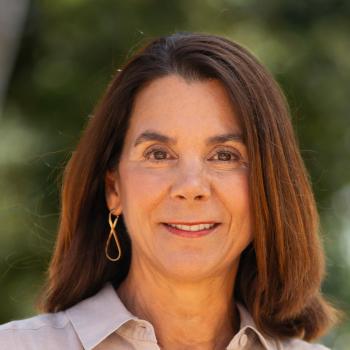
Associate Dean of Research, School of Medicine
Stanford University
Tina is Associate Dean of Research at the Stanford School of Medicine and Professor of Medicine (Computational Medicine), of Biomedical Data Science, of Surgery and, by courtesy, of Epidemiology and Population Health. Her work sits at the intersection of informatics and population health, developing standards for responsible AI in clinical care and using large real-world datasets to measure and reduce bias in healthcare algorithms. She has published over 230 articles and was elected a fellow of the American College of Medical Informatics in 2020.
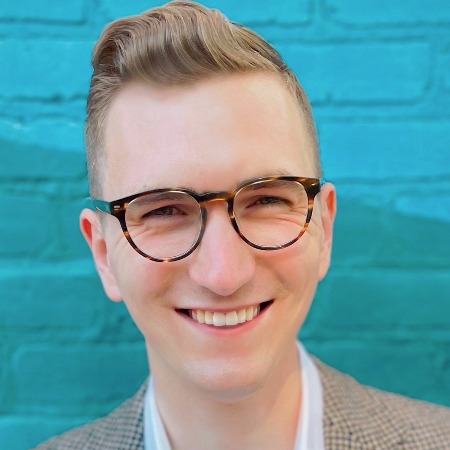
Head of Governance
Transluce
Conrad serves as Head of Governance for Transluce, a nonprofit AI research lab, and Chair of the AI Evaluator Forum, a network of independent AI evaluation organizations. He previously led the U.S. Center for Standards and Innovation and led AI policy development in various roles across the White House, Congress, and the Department of Defense, building on his prior experience as a machine learning engineer.
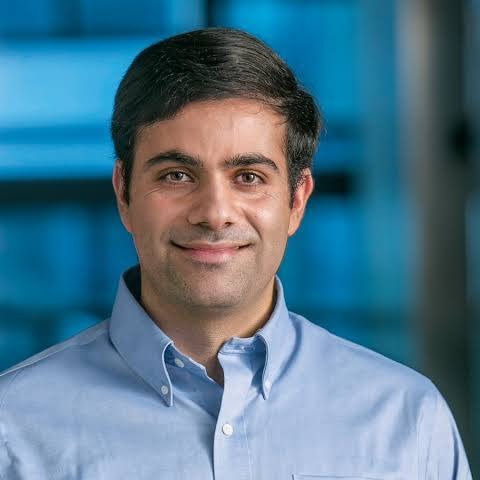
Associate Professor of Electrical & Systems Engineering
University of Pennsylvania
Hamed is a senior research scientist at Google and an associate professor of Electrical and Systems Engineering, Computer and Information Systems, and Statistics and Data Science at the University of Pennsylvania. He was previously a research fellow at the Simons Institute for the Theory of Computing at UC Berkeley and a post-doctoral researcher at ETH Zurich, and holds a Ph.D. in Computer and Communication Sciences from EPFL. His awards include the IEEE Information Theory Society's Thomas M. Cover Dissertation Award, an NSF CAREER Award, an AFOSR Young Investigator Award, and the society's James L. Massey Award for Young Scholars.

Co-Founder & CTO
Valgo
Sydney is the co-founder and CTO of Valgo, where she focuses on quantifying deployment risk for insurance of physical AI systems. She received her PhD in Aeronautics and Astronautics from Stanford in 2023 with research focused on the design and validation of safety critical systems. She is an author of the textbook Algorithms for Validation and teaches a course in the winter quarter at Stanford called Validation of Safety Critical Systems.

Co-Founder & CEO
Valgo
Robert is the co-founder and CEO of Valgo, a public benefit corporation building risk models for the validation and insurance of safety-critical autonomy. He received his PhD in computer science from Stanford, where he studied algorithms for safe planning under uncertainty and safety validation, advised by Mykel Kochenderfer. Before Stanford, Robert was at MIT Lincoln Laboratory, where he helped develop, optimize, and validate ACAS X, the next-generation aircraft collision avoidance system that became a worldwide standard.
M.S. Candidate
Stanford University
Houjun is a first year Master's student in computer science, advised by Professor Mykel Kochenderfer. His research focuses on building adaptive neural network architectures for generalization into diverse use cases, and ensuring these uses can be safeguarded by adaptive safeguards. Houjun is affiliated with the Stanford Intelligent Systems Laboratory and the Stanford NLP Group.
Mykel Kochenderfer · Stanford Center for AI Safety
How do we know it is safe?
Seraphina Goldfarb-Tarrant · Cohere
The world outside the beaker: modelling the complexity of sociotechnical systems in LLM safety and security
Tina Hernandez-Boussard · Stanford University
TBD
Dave Orr · Anthropic
Safeguards at Anthropic: model behavior, classifiers, access control, and monitoring
Conrad Stosz · Transluce
Improving the science and practice of evaluating AI companions
Hamed Hassani · University of Pennsylvania
Distributed agent attacks and how stateful defenses catch them
Sydney Katz & Robert Moss · Valgo
Continuous monitoring of safety performance
Houjun (Jack) Liu · Stanford University
Adaptive stress testing for safer, more secure, and less deceptive language models
Schedule subject to change.

Co-Director
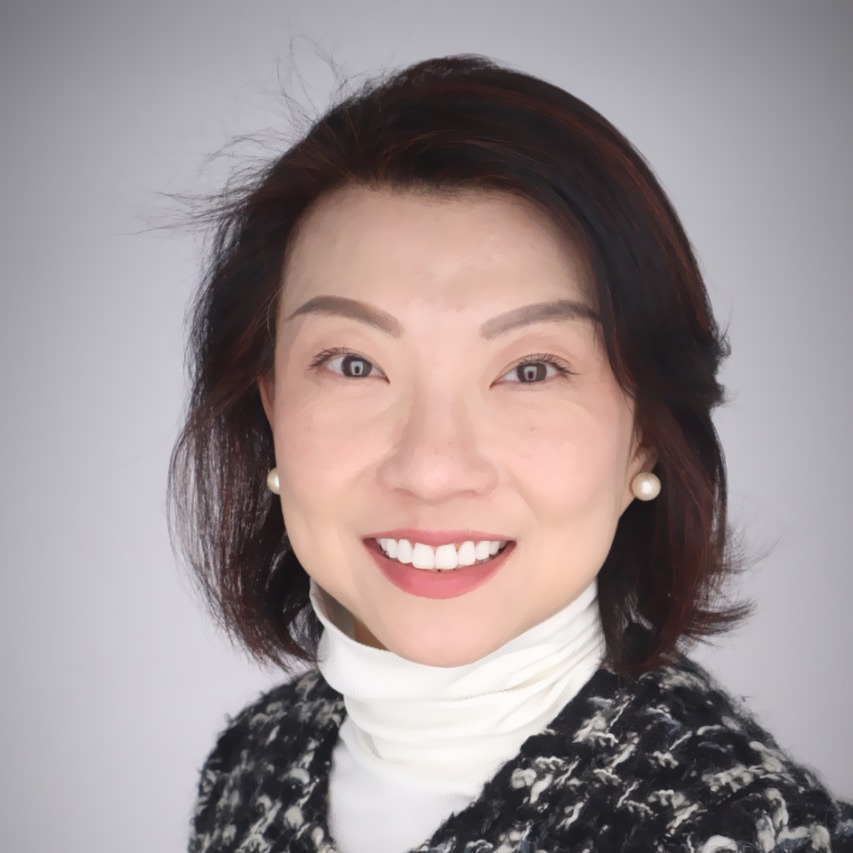
Co-Director
Co-Director

Executive Director

Ph.D. Candidate

Visiting Scholar

Ph.D. Candidate

M.S. Candidate
Research Communications Lead

Postdoctoral Scholar


We welcome support from organizations working toward safe and trustworthy AI. If you are interested in supporting this year's Annual Meeting, we would be glad to hear from you.
stanford-ai-safety@stanford.eduRegistration is open for SAFE Annual Meeting 2026 at Paul Brest Hall, Stanford University.
Register Now